How to open a gym in 2026
October 28, 2026
1
minutes

Dreaming of trading your day job for a gym of your own? You're igood company. The fitness industry keeps growing, and more people than ever want to know how to open a gym in 2026, 2027, and beyond.
But knowing how to open a gym takes more than a great playlist and a squat rack. Aspiring gym owners need a clear niche, a realistic budget, and a plan for filling their space with members who stick around. Plenty of new gyms struggle in year one, not because the idea was bad, but because the planning was thin.
The good news is that opening a gym isn't a mystery. It's a series of decisions, and you can make them in the right order. This guide walks through the full process, from your first idea to your first 100 members.

How to start a gym
Before you sign a lease or price out treadmills, get clear on what you're building and who it's for. Five decisions shape everything that follows.
- Find your niche. There's probably a gym near your chosen area already. You don't have to beat it head-on. Pick one or two things you'll do differently, whether that's yoga, spin, powerlifting, or small-group training, and build your identity around them. Niche matters for profit too: in a 2020 Statista survey, 69% of US CrossFit gyms reported being profitable, compared with about half of martial arts gyms.
- Know exactly who you're serving. Define your ideal member and the problem you solve for them. That answer drives your equipment, class schedule, opening hours, and even your color palette.
- Get qualified, and hire people who are too. Members treat a gym owner as the expert. Get the training and accreditations that fit your services, and make sure every trainer on your team is certified. Personal training certifications usually run from a few hundred to around a thousand dollars, and many can be done online.
- Choose a name that does some marketing for you. Your name is your first impression. Aim for something memorable, easy to say, and true to the atmosphere you want to create.
- Test demand before you commit. Don't sign anything big until people have told you they'll join. Start small with outdoor classes, pop-ups, or a handful of founding members, then scale once you know your community is real.
Gym business plan
Not a fan of spreadsheets? Write the plan anyway. A gym business plan turns "I think this could work" into something you can test, fund, and follow. Your gym’s business plan answers three simple questions: how your business works, how you'll succeed, and what steps get you there.
Research published in Harvard Business Review found that entrepreneurs who write formal plans are more likely to succeed. And if you're hoping for a bank loan or investors, a plan isn't optional.
Think of it as a living document. Revisit it as you learn what works. A strong plan covers:
- Executive summary. Your goals, mission, and vision on one page. Write it last, even though it comes first.
- Company overview. What makes your gym different, who it serves, and a bit about your own background.
- Services and amenities. Classes, personal training, equipment, and extras like recovery areas or a small shop.
- Management team. Who you'll hire, what they'll own, and how they'll report.
- Market research and marketing strategy. Your target members, your unique selling proposition, and how you'll reach people.
- Competitor analysis. What nearby gyms offer, who they target, how they price, and where they fall short.
- Financial projections and forecasting. Startup costs, three months of operating expenses, and expected members and revenue for years one to three.
- Financial strategy, payments, and funding. How your pricing supports your positioning, how members will pay, and where your startup capital is coming from.
Want to go deeper? Our gym business plan checklist includes templates and examples to borrow from.
Cost to open a gym
Let's talk about money, the question on every future gym owner's mind.
What is the cost to open a gym? The honest answer is that it depends on three things: size, location, and type of gym. A boutique yoga studio will cost far less than a mid-size CrossFit box or a full-service club. Whatever you choose, plan for at least five figures.
For a typical 3,000 sq ft US gym, startup costs commonly land between $245,000 and $400,000. Here's where the money goes.
Startup costs
- Lease deposit or down payment. Leasing usually runs 15–30 per square foot per year (45,000–90,000 annually for 3,000 sq ft), plus a deposit of a few months' rent. Buying means a 20–30% down payment on roughly 35–50 per square foot.
- Equipment. Buying a full set for 3,000 sq ft runs around $75,000. Leasing costs about 2,000–3,000 a month, and leased gear gets maintained and refreshed for you. Add 10,000–20,000 for the non-training extras like furniture, towels, and signage.
- Build-out and décor. Budget around $35 per square foot (about $105,000 for 3,000 sq ft) for showers, locker rooms, and flooring. It never hurts to ask your landlord to chip in.
- Licenses, permits, and legal fees. About $5,000 covers a business license, trade name registration, and health and safety certification, though it varies by location. Legal help can run up to $5,000 a year.
- Point-of-sale hardware. Around $1,400 gets you tablets, card readers, a printer, and a cash drawer.
Ongoing costs
- Payroll. Usually your biggest expense. A common rule of thumb is one staff member for every 50 members.
- Rent or mortgage and utilities. Electricity is the big one. A 3,000 sq ft gym with cardio equipment might pay around $2,500 a month.
- Marketing. Roughly 3,000–5,000 a month around launch, plus a percentage of monthly revenue.
- Insurance. Typically 500–2,000, covering liability, workers' compensation, and more.
- Maintenance and repairs. Plan for 500–1,000 a month in wear and tear.
- Gym management software. A monthly subscription that pays for itself in saved hours.
In the UK, expect to spend at least £35,000 on equipment, and a gym franchise can cost between £185,000 and £315,000 in total. For the full breakdown, including buy-versus-rent comparisons, see our guide to the cost of opening a gym in the US and UK.
One last tip: keep a cash reserve that covers about three months of operating costs. There's always something the plan missed.

Opening a gym
With your plan and budget in place, it's time for the practical side of opening a gym. This is where the big logistics get locked in.
- Handle licenses, permits, and legal structure first. Requirements vary by city, state, and country, so check with your local authorities early. Skipping the paperwork can mean heavy fines or a forced closure. Register your business, open a business bank account, and pick the legal structure that suits you.
- Get insured before anyone walks in. Fitness insurance protects you financially if a member is injured or equipment fails. Consider it your safety net.
- Choose your location around your members. Go where your target members live, work, and commute. Nearby physio clinics and health food shops can even become cross-promotion partners. A handy rule is 10–15 square feet of workout space per member at peak times.
- Buy the best equipment you can afford. Your gear sets the tone for your brand, and poor or unsafe equipment puts members at risk. Buying gives you ownership, while leasing keeps upfront costs down and lets you upgrade. Used equipment can save money, but you'll often give up warranty coverage and up-to-date tech.
- Build a team that loves the work. Look for certified trainers with real experience and a passion for motivating people. Check accreditations, and consider a test class in the interview so you can see how they coach. If you're only running a few classes a week, freelance instructors can be more budget-friendly than employees.
Starting a gym
The space is ready. Now for the part that really makes or breaks a gym: filling it. Starting a gym well means setting smart prices, winning your first members, and putting systems in place so you aren't buried in admin.
Set a pricing strategy that fits your gym
Pricing shapes who joins, what you earn, and how your gym is perceived. Start by researching what competitors charge, since plenty of people choose on price alone, then decide where you want to sit. The most common gym pricing models are:
- Monthly memberships. Predictable recurring revenue, which helps smooth out seasonality.
- Pay-as-you-go. A low-commitment way to try you out, but too unreliable to be your only income.
- Bundles. Tiered packages that add perks like extra classes or towels.
- Dynamic pricing. Prices that move with demand. It's powerful, but you'll want software to manage it.
- Value-based pricing. Prices set by the results you deliver, best for specialists and niche studios.
As a rule, making shorter commitments costs more than longer ones. For context, UK gym memberships commonly run £20–£40 a month, while US sign-up fees of 100–300 are common. And don't expect to nail it on the first try. Ask your members for feedback and be ready to adjust.

Win your first members
The industry benchmark for early success is about 100 members. A few tactics help you get there:
- Offer a free trial. A free class or weekly pass lets people feel your culture before they commit.
- Launch with a founding-member offer. A time-limited pre-sale creates urgency and gives you cash and buzz before opening day.
- Start a referral program. Reward members with a free month, discount, or gift for every friend they bring.
- Build community from day one. Spotlight members, run challenges, and reply quickly to every message. Loyalty is what keeps revenue steady after the launch excitement fades.
- Show up online. A simple website and active social accounts go a long way. Explore Facebook, Instagram, TikTok, and other channels that your target audience use.
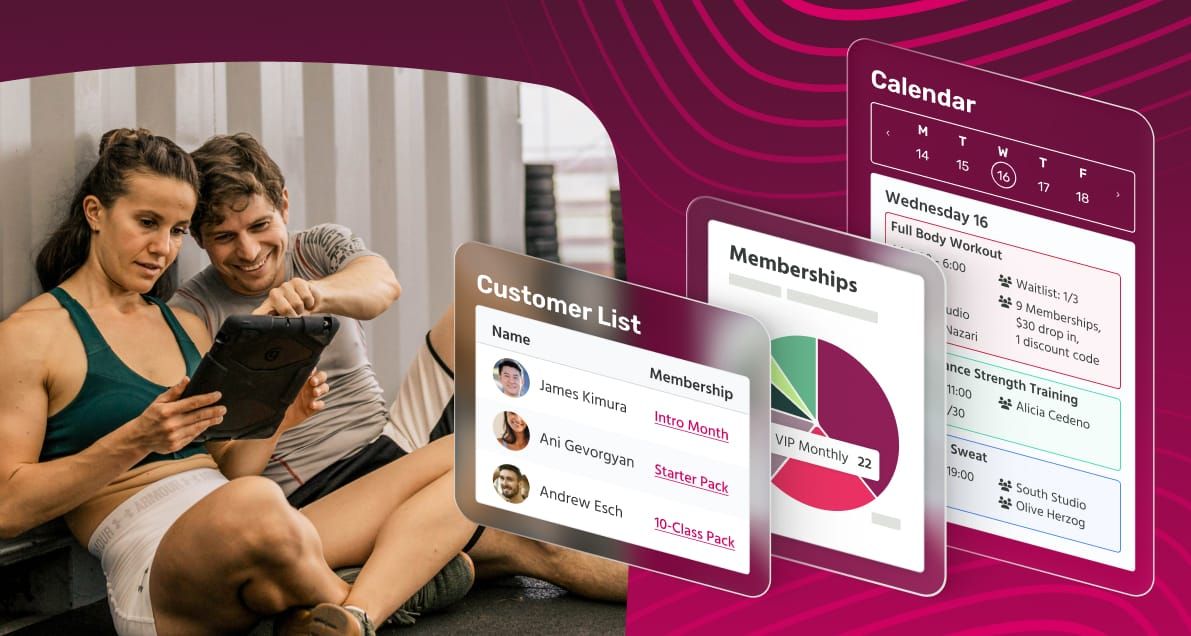
Running a gym means a lot of repeat work: bookings, recurring payments, waivers, member messages, and reporting. Gym management software like TeamUp handles all of it in one place, with memberships and packs, online booking, automated billing, waivers and forms, reporting, and a branded member app. TeamUp says studios can save 8+ hours a week on admin.
Getting started is simple, too. There's no setup fee, no long-term contract, and a free data import service if you're switching from another system. Pricing is based on your number of active customers. At the time of writing, for example, it's $189 a month for 101–200 customers, with an optional custom branded app at $99 a month.
Opening a gym doesn't come down to one big move. It's a string of smart, well-ordered decisions: define your niche, write your plan, budget honestly, sort the logistics, and build your community from the very first day. Put those pieces together, and you'll spend less time guessing and more time coaching the members you set out to serve.
Ready to see how TeamUp can run the back end of your new gym? Start a free trial today!

Ready to scale your fitness business?
Learn more about the #1 fitness management software for boutique fitness studios, gyms and franchises